


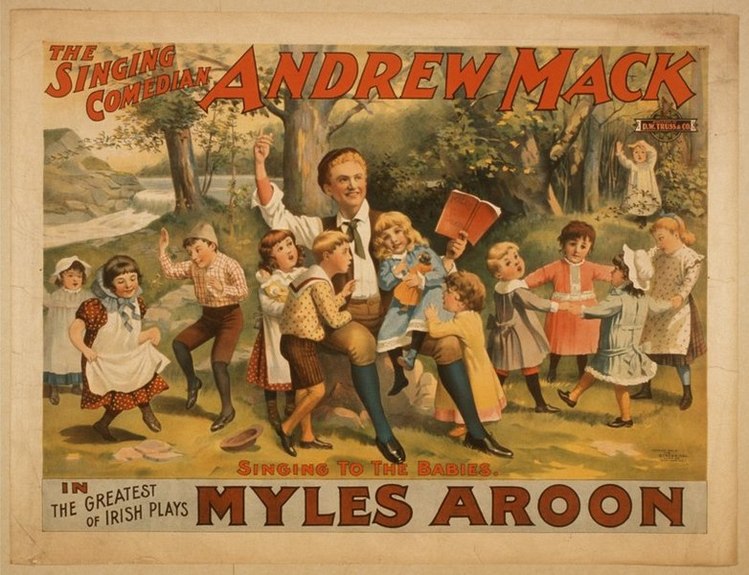
By the 1880s, Irish Americans had secured prominent vaudeville positions, but as religious sensibilities shifted with the turn of the century, this was soon to change. Between 1880 and 1910, new Irish immigrants far exceeded all other groups. One might expect that they would take advantage of expanding popular culture venues and join their fellow Irish Americans as the new vaudeville stars. Instead, there was an Irish-American retreat from commercial vaudeville, due largely to the influence of Catholic moral teachings.
After the Great Famine, Cardinal Paul Cullen's devotional movement led a religious revival in Ireland. Cullen's brand of Catholicism emphasized the evils of the flesh. As American churches became increasingly populated by priests and nuns trained in Ireland, those anti-pleasure values took hold among Irish-American families. While they were grateful for the bountiful food in the United States, Irish American women's attitude was that though it prevented hunger, they did not look to it with great pleasure. For example, the writer Paul Donoghue recounted his mother's behavior, writing, "Laughter and enjoyment, let alone sexual pleasure, are not for God-fearing [Catholics]. She gave to every charity but not to herself. She loved flowers but could never buy them for herself."
Read Full Article »